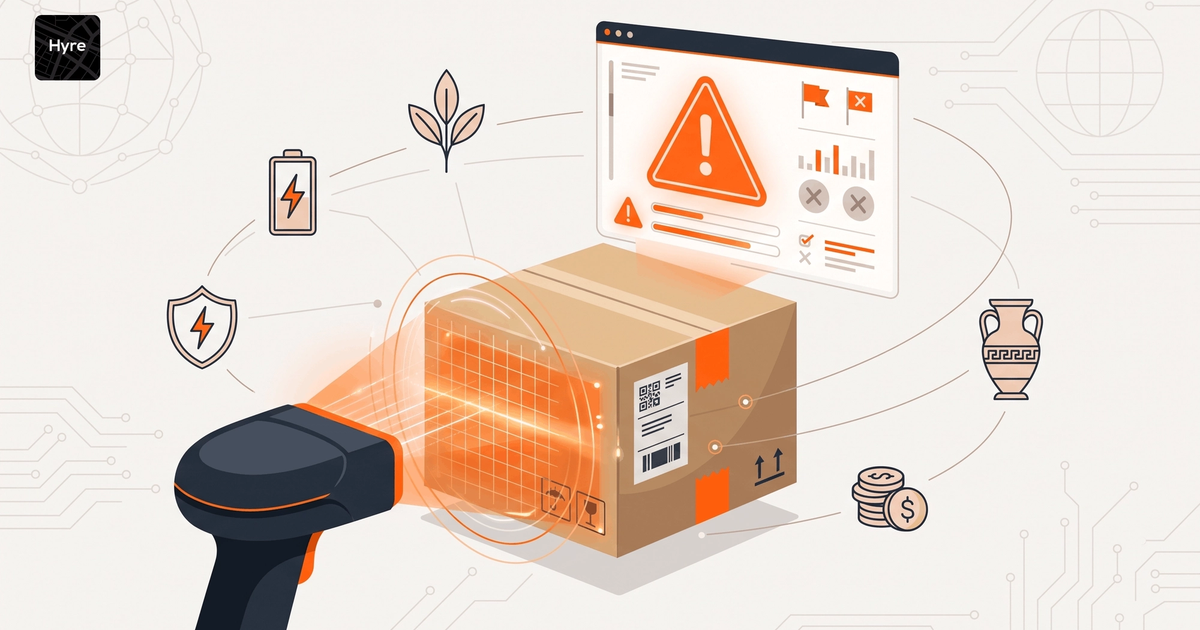
Every parcel opened at customs costs its sender the same three things: time, a fee, and sometimes the item itself. Almost none of it is deliberate smuggling. It is someone posting a power bank, a handful of seeds, or a brass statue inherited from their grandmother, without knowing it needed a form.
There are three separate lists worth understanding, and people routinely confuse them. One belongs to your courier, one belongs to Nepal, and one belongs to the country your parcel is going to. An item can be perfectly legal to export and still be refused at the counter, or accepted in Kathmandu and seized on arrival.
What couriers refuse outright
This list is the airline's, not the government's. Anything that can catch fire, leak, or explode in a cargo hold is refused by every international courier, and no paperwork makes it shippable by air:
- Loose lithium batteries and power banks sent on their own
- Flammable liquids, aerosols, paints, and pressurised containers
- Matches, lighters, fireworks, and camping fuel
- Cash, bullion, and bearer financial instruments
- Perishable food without cold-chain handling
- Live animals, plants, and soil
The most common surprise on this list is the battery. A laptop or a phone with its battery installed is usually fine; the same battery loose in a box is not. If you are posting a device, leave the battery inside it and say so on the declaration.
What Nepal restricts on export
This is a different question, and the answer is set by Nepali law rather than by your courier. Broadly, three groups need attention: antiques and objects of cultural or religious significance, wildlife and plant products, and precious metals and stones. Items in these groups are not necessarily banned — several are exportable with the right certificate — but sending one without it is what turns a delivery into a seizure.
Because the specifics change, check the current list with the Department of Customs rather than trusting any article, including this one.
What needs a permit first
A permit is not a formality you can arrange after the fact. Customs will hold the shipment until the certificate exists, and the parcel sits in a warehouse accruing storage while you obtain it. Two rules make this manageable: start the permit before you pack, and get the reference number onto the commercial invoice rather than in a separate envelope.
How to check before you pack
- Describe the item precisely. "Gift" and "sample" are not descriptions. "Cotton scarf, 200g, made in Nepal" is. Vague declarations are the single most common reason a parcel is opened.
- Check both ends. Nepal's export rules and the destination country's import rules are separate, and a parcel has to satisfy both. Food, seeds, and herbal products fail most often on the import side.
- Ask your courier in writing. A confirmation you can point to later is worth more than a phone call.
- Get the paperwork right. Most held parcels are not stopped for what is inside them but for what is missing on the form — see the paperwork every shipment needs.
If your parcel is already held
Do not send a replacement immediately. Find out first whether the shipment was stopped for a missing document, a missing permit, or a prohibited item, because only the first is fixable by email. Ask for the reason in writing, supply exactly what is asked for, and keep the tracking number in every message.
If you are unsure about something in your box, ask before you seal it. A question costs a minute. A seized parcel costs the item.
- #hyre
- #courier
- #best courier in nepal
- #customs and compliance of Nepal